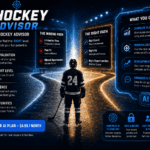

For years, hockey families have been sold a simple message:
More showcases.
More tournaments.
More travel.
More exposure.
The assumption has been that if enough people see you play, opportunities will follow.
But after working with thousands of players, families, coaches, and junior hockey prospects, I’ve come to believe that the future of hockey development looks very different.
The players who advance are not necessarily the players who are seen the most.
They are the players who develop the most.
Why Exposure Culture Is Broken
The youth hockey landscape has become obsessed with exposure.
Families spend thousands of dollars traveling to showcases, combines, camps, and tournaments hoping to be discovered.
The reality?
Most coaches and scouts are not looking for players who appear at the most events.
They’re looking for players who are ready.
A player with strong skating, hockey sense, habits, and character will create opportunities wherever they play.
A player who lacks those qualities can attend every showcase in North America and still struggle to advance.
Exposure without development is simply visibility.
Development creates opportunity.
What Actually Gets Players Recruited
One of the biggest misconceptions in hockey is that recruiting happens because of one great weekend.
It usually doesn’t.
Recruiting happens because players consistently demonstrate:
- Hockey IQ
- Skating ability
- Competitiveness
- Coachability
- Consistency
- Character
- Habits away from the rink
The best players separate themselves through years of development, not one tournament.
Coaches notice players who help teams win, compete every shift, and improve over time.
The recruiting process is often much less mysterious than families think.
How AI Can Help Players and Parents
Technology is changing nearly every industry, and hockey is no exception.
Artificial intelligence can now help players:
- Analyze development plans
- Understand recruiting pathways
- Create training schedules
- Learn hockey systems
- Review habits and goals
- Access coaching support at any time
For parents, AI can help answer questions that previously required endless internet searches and conflicting advice.
Technology will never replace great coaching.
But it can make quality information more accessible than ever before.
The future belongs to families who learn how to combine technology with strong coaching relationships.
Why Development Beats Shortcuts
Every year, players look for shortcuts.
The right camp.
The right showcase.
The right contact.
The right opportunity.
Yet the players who advance almost always follow a different path.
They commit to:
- Consistent practice
- Skill development
- Strength training
- Recovery
- Film study
- Good habits
There is no substitute for becoming a better player.
Development remains the most reliable recruiting strategy available.
What Junior Coaches Really Look For
As someone involved in junior hockey, I can tell you that coaches often evaluate more than skill.
We look for:
- Competitiveness
- Decision making
- Work ethic
- Character
- Coachability
- Consistency
- Team-first behavior
Can the player be trusted?
Can they handle adversity?
Do they make teammates better?
Talent matters.
But talent alone rarely determines long-term success.
The Biggest Mistakes Families Make
The most common mistakes are surprisingly simple:
- Chasing exposure instead of development
- Comparing their child to others
- Focusing on rankings and status
- Looking for shortcuts
- Allowing fear to drive decisions
- Forgetting that development takes time
The hockey journey is rarely linear.
Growth happens through patience, consistency, and daily habits.
The Future
The future of hockey development is not more tournaments.
It is not more pressure.
It is not more noise.
The future is smarter development.
The future is better information.
The future is technology that supports coaching rather than replacing it.
Most importantly, the future belongs to players who focus on becoming better rather than becoming noticed.
Because eventually, the players who develop become impossible to ignore.
Let’s Continue the Conversation
I would love to hear your thoughts.
What do you think is the biggest challenge facing hockey development today?
What advice would you give young players and parents?
Feel free to reach out:
Andrew Trimble
Founder, Scoring Concepts
Co-Owner, New England Wolves Hockey Club
Creator, AI Hockey Advisor
Email: scoringconcepts@gmail.com
You can also connect through:
- AI Hockey Advisor
- Hockey Development Hub
- Scoring Concepts Camps and Programs
Let’s work together to build a better future for hockey development.