
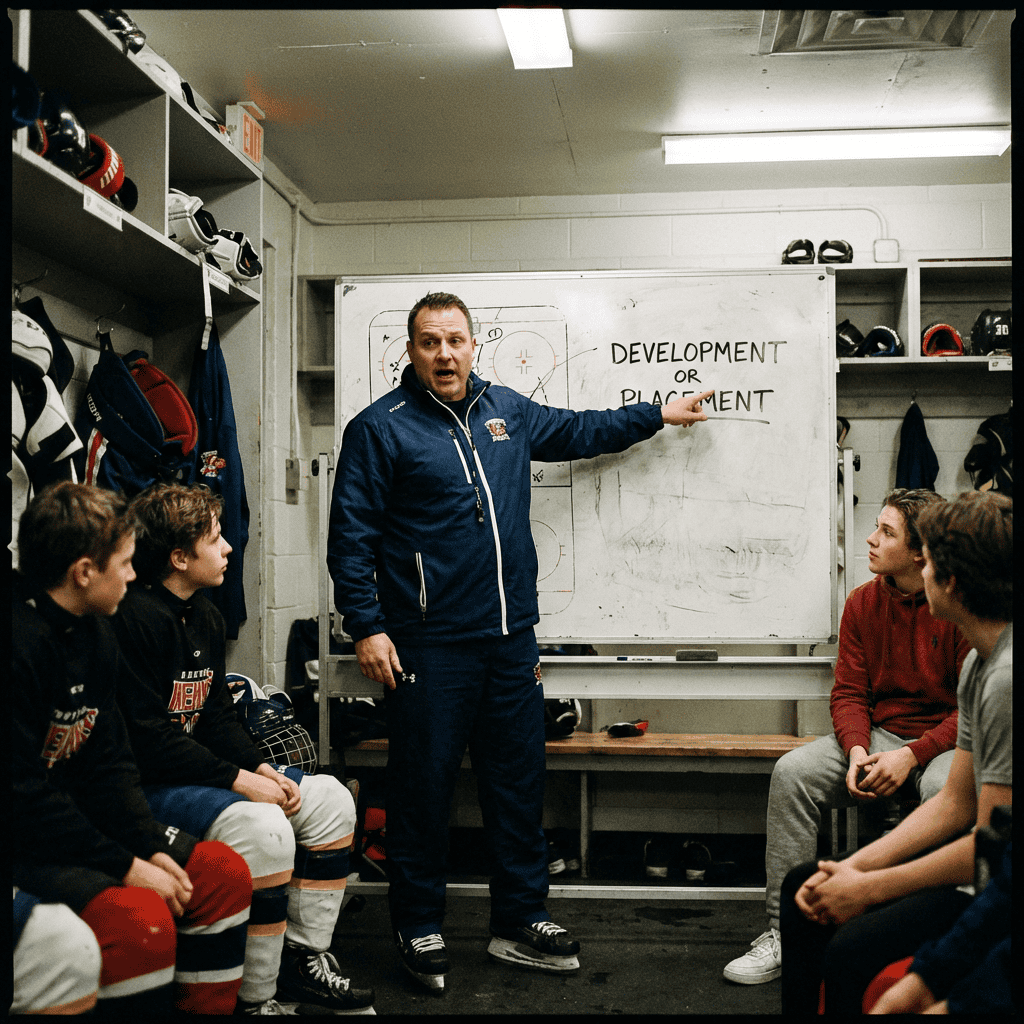
In hockey, “development” and “placement” programs aren’t just different philosophies — they produce very different long-term outcomes for players. A lot of frustration in youth and junior hockey comes from families thinking they’re buying one… and getting the other.
Here’s a clean, side-by-side way to think about it.
Development-Focused Hockey Programs
Primary question: “How much better will this player be in 12–36 months?”
What they emphasize
- Skill acquisition (skating, puck skills, hockey IQ)
- Practice > games (often 2–3:1 practice-to-game ratio)
- Mistake tolerance – learning is messy
- Long-term athlete development
- Equal reps, especially at younger ages
- Individualized feedback and corrections
Coaching behavior
- Teaches systems after skills are solid
- Rotates players through positions
- Develops weak areas, not just strengths
- Ice time reflects learning goals, not the scoreboard
Typical outcomes
- Players improve even if the team doesn’t dominate
- Late developers stay engaged
- Better transition to higher levels later
- Fewer burnout and dropout issues
Common signals it’s truly developmental
- Coaches talk about progress, not wins
- Practices look intentional, not scrimmage-only
- Off-ice skill work, video, or feedback loops
- Honest conversations about readiness and next steps
Placement-Focused Hockey Programs
Primary question: “Where can we put this player right now?”
What they emphasize
- Roster labels (AAA, Tier 1, Elite, etc.)
- Exposure events & showcases
- Winning now
- Top-line / top-pair usage
- Reputation & branding
Coaching behavior
- Short bench when games matter
- Roles are fixed early
- Systems-heavy, skill-light practices
- Development happens “on your own time”
Typical outcomes
- Early developers look great… early
- Late bloomers stagnate or quit
- Players plateau technically
- Advancement depends heavily on politics, timing, and contacts
Common signals it’s placement-first
- Heavy marketing of “who we place”
- Ice time tied to mistakes and score
- Practices resemble game prep only
- Feedback is vague (“be harder,” “compete more”)
The Hard Truth Most Programs Won’t Say
Placement without development eventually runs out.
Development eventually creates placement.
At younger ages especially:
- Development = control
- Placement = borrowed status
Where Families Get Tripped Up
- Assuming wins = development
- Believing early placement guarantees future opportunity
- Confusing “busy schedule” with quality training
- Mistaking exposure for readiness
The Best Programs Do Both — But in Order
The healthiest organizations:
- Develop first
- Place when earned
- Tell the truth about timelines
- Protect long-term upside