Stability Wins: A Data-Driven Look at Why Some Junior Hockey Organizations Last
When people talk about successful junior hockey organizations, they often focus on recruiting, coaching, facilities, or player advancement.
Those things matter.
The Hockey Development Hub is a reader-supported publication. To receive new posts and support my work, consider becoming a free or paid subscriber.
But after nearly a decade helping operate the New England Wolves in Laconia, I’ve come to believe that the single most important factor in long-term success is something much less glamorous:
Stability.
To understand why, it’s worth looking at the history of junior hockey in Laconia.
Before the Wolves arrived, the city was home to the Laconia Leafs. From 2005 through 2013, the Leafs struggled to establish consistent success on the ice.
Over eight seasons, the Leafs posted records of:
- 6 wins
- 5 wins
- 5 wins
- 5 wins
- 5 wins
- 10 wins
- 3 wins
- 10 wins
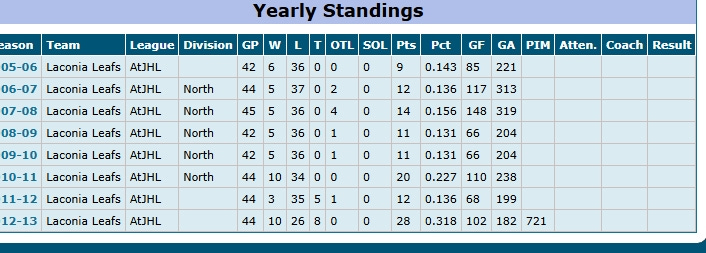
During that eight-year span, the organization never posted a winning season and never won more than 10 games in a year.
The numbers tell a story, but they don’t tell the entire story.
Like many struggling junior hockey organizations, the challenges weren’t simply about wins and losses. Organizations facing long-term struggles often experience instability in leadership, staffing, recruiting, housing, operations, and overall direction.
When our staff arrived in Laconia, we knew we weren’t simply taking over a hockey team.
We were trying to build a sustainable organization.
That required a completely different approach.
Instead of asking, “How do we win next season?”
We started asking, “How do we build something that is still here ten years from now?”
That mindset influenced every decision we made.
One of the biggest differences between the Wolves and many junior hockey organizations has been consistency.
For more than a decade, key members of our leadership and operational group have remained in place.
Tim Kunes.
Mike Potenza.
John McKenzie.
Along with countless billet families, volunteers, rink staff members, community partners, and supporters who have continued to invest in the program year after year.
The consistency extended beyond personnel.
Our schedule remained consistent.
Our development model remained consistent.
Our housing expectations remained consistent.
Our relationships with the rink remained consistent.
Our organizational mission remained consistent.
The systems improved, but the foundation never changed.
The results followed.
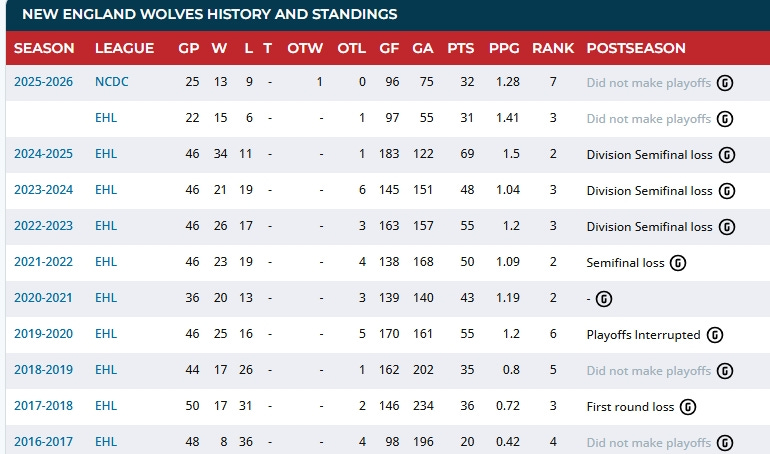
During our final full season operating both EHL and EHLP teams, the Wolves recorded a combined 72 wins, the highest combined total of any organization in the league that season.
Think about that for a moment.
The same city that once struggled to produce double-digit wins in a season became home to one of the league’s most successful organizations.
That transformation didn’t happen because of one great recruiting class.
It didn’t happen because of one great coach.
It didn’t happen because of one great season.
It happened because of years of stability and the key factors that will be written about in this series for the next 6 days.
Years of relationship building.
Years of operational consistency.
Years of developing trust within the community.
Years of creating systems that players, families, and staff members could rely upon.
One of the biggest mistakes I see in junior hockey today is organizations chasing short-term solutions.
New staff every year.
New philosophies every year.
New expectations every year.
New systems every year.
The result is often confusion.
Players don’t know what they’re joining.
Families don’t know what to expect.
Staff members don’t know the long-term vision.
The organizations that survive and thrive are usually the ones that commit to something bigger than a season.
They build systems.
They build trust.
They build culture.
Most importantly, they build stability.
The data from Laconia tells a powerful story.
One organization struggled to gain traction over nearly a decade.
Another organization committed to stability, consistency, and long-term thinking and became one of the most successful programs in its league.
That’s not an accident.
That’s what happens when an organization stops thinking season-to-season and starts thinking decade-to-decade.
Because in junior hockey, stability isn’t just an operational advantage.
It’s a competitive advantage.
And in many cases, it’s the difference between organizations that survive and organizations that disappear.
Key Takeaways for Operators
• Stability creates trust.
• Consistent leadership creates stronger culture.
• Housing stability matters.
• Strong operational systems compound over time.
• Community relationships are built over years, not months.
• Sustainable organizations think in decades, not seasons.
Free Junior Hockey Operator Consultation
As part of The Laconia Blueprint series, I’m offering a limited number of free Zoom consultations for junior hockey owners, operators, coaches, and leadership groups.
If you’d like to discuss organizational structure, housing systems, recruiting, player development, staffing, culture, or long-term sustainability, I’d be happy to connect.
Schedule Your Free Zoom Consultation Below
scoringconcepts@gmail.com
About Andrew Trimble
Andrew Trimble is the co-owner of the New England Wolves Hockey Club, founder of Scoring Concepts, creator of AI Hockey Advisor, published author, and hockey coach.
For nearly a decade, he has helped lead one of New England’s most stable and successful junior hockey organizations while working with thousands of players, families, coaches, and throughout North America.