
In the NHL, most penalty kill (PK) forechecks are designed to burn time, disrupt entries, and force dump-ins rather than aggressively chase. Teams vary slightly, but almost all systems fall into a few core structures.
Here are the most common PK forechecks used in the NHL:
1. Passive 1-1-2 (or “Soft Press”)
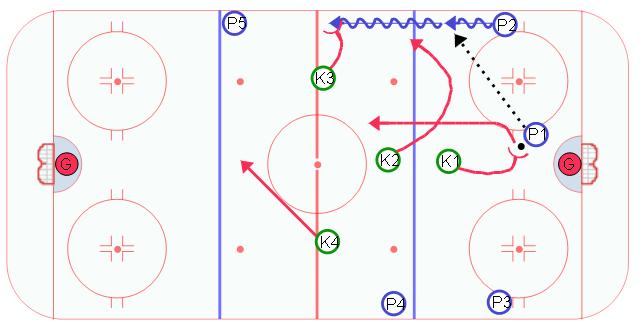
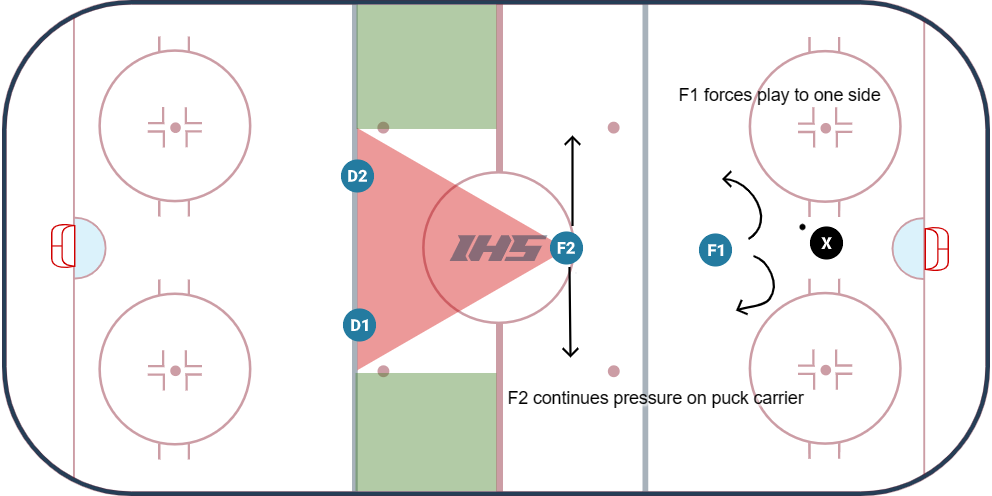
Structure:
- F1 pressures puck carrier lightly
- F2 supports in the middle (takes away middle lane)
- D1 + D2 hold the blue line
Purpose:
- Force dump-ins instead of controlled entries
- Keep the puck to the outside
- Stay compact and layered
Why NHL teams use it:
- Low risk
- Keeps structure intact
- Allows defensemen to stand up at the line
👉 This is probably the most common PK forecheck in the NHL today
2. Aggressive 1-2 Press
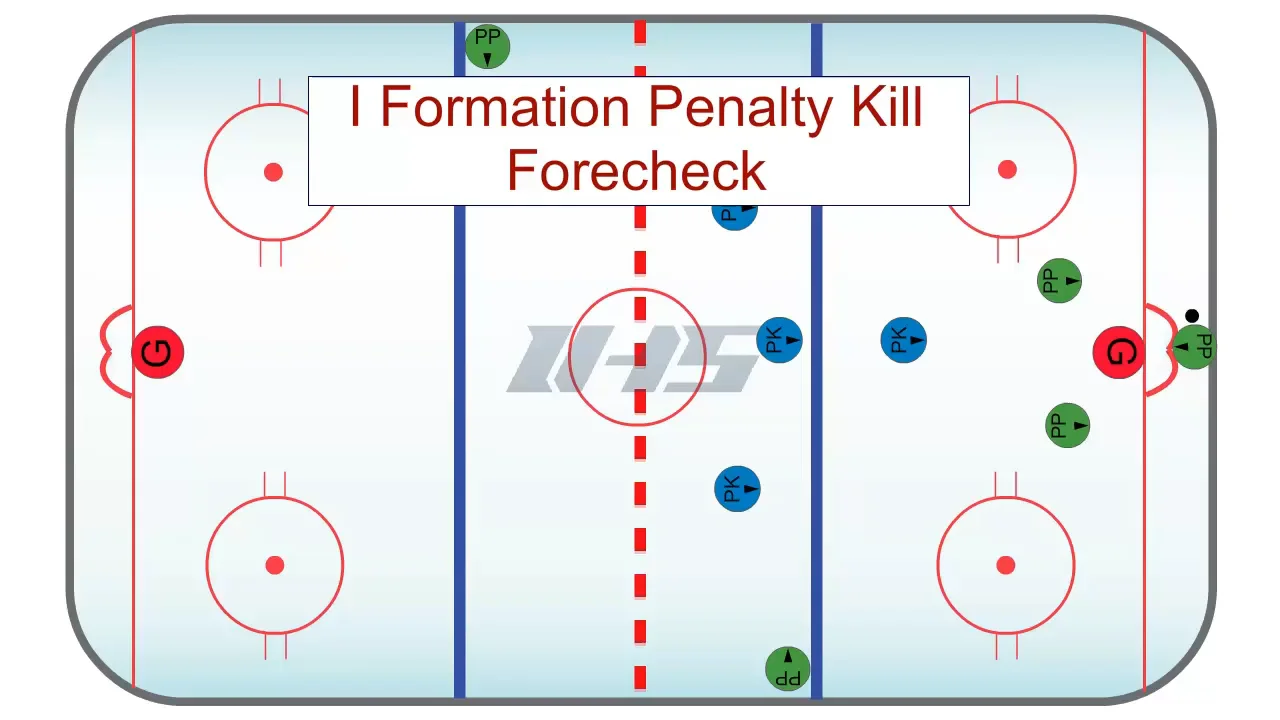

4
Structure:
- F1 pressures hard on puck carrier
- F2 + F3 (or F2 + D stepping up) close quickly
- Defense tight to blue line or stepping early
Purpose:
- Disrupt breakout early
- Force turnovers in neutral zone
- Prevent clean setups
When teams use it:
- Against weaker power plays
- When needing momentum (late game, trailing)
- Against slow or predictable breakouts
👉 Risk/reward system — can create quick clears or shorthanded chances, but also opens gaps if beaten
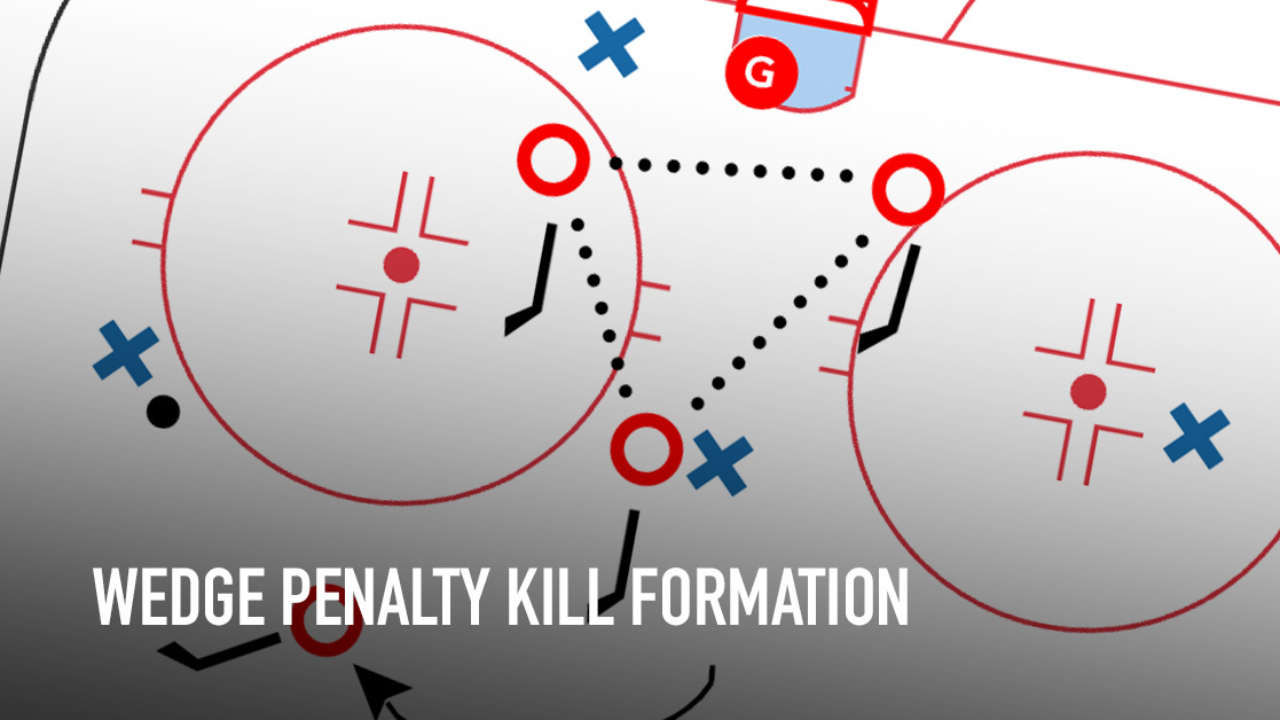
3. Wedge + Press (Hybrid PK Forecheck)

4
Structure:
- Three players form a triangle (“wedge”) in middle/blue line
- One forward (+1) pressures puck
Purpose:
- Protect the middle at all costs
- Funnel puck to boards
- React and collapse quickly if entry is gained
Why it’s popular:
- Extremely strong against controlled entries
- Easy to rotate into defensive zone coverage
👉 This is often blended with a 1-1-2 look — many NHL teams don’t run it “pure”
4. Full Ice Pressure (2-2 or 1-3 variations)
4
Structure:
- Two players pressure deep
- Two players read/react behind
Purpose:
- Kill time immediately
- Force rushed decisions behind opponent net
When used:
- Late in PK
- Against elite breakout teams
- When trying to change momentum
👉 Less common as a base system — more of a situational tactic
Key Trends in the NHL (Important for Coaching)
1. Middle Ice Denial is Everything
- Almost every system prioritizes:
- Taking away the middle
- Forcing wide entries
- Creating dump-ins
2. Controlled Entries = Loss for PK
- If the power play enters clean → advantage PP
- PK forecheck success = denying clean entry
3. Pressure is Increasing League-Wide
- Modern PKs are more aggressive than 10–15 years ago
- More teams are:
- Attacking breakouts
- Looking for turnovers before the blue line
4. Hybrid Systems Dominate
- NHL teams rarely run one static system
- They switch between:
- Passive → Aggressive
- Based on:
- Opponent tendencies
- Score/time
- Personnel on ice
Simple Way to Teach It (for players)
- F1: Angle + dictate direction
- F2: Take away middle
- D: Hold line, gap up early
- Everyone: Force dump → win retrieval → clear