The Best Coaches Are Mentors First: 10 Ways to Make a Lasting Impact on Young Athletes
When people think about great coaches, they often think about systems, championships, or technical knowledge. Those things matter, but they aren’t usually what athletes remember twenty years later. Ask a former player about the coach who changed their life, and you’ll rarely hear about a power play or a forecheck. Instead, you’ll hear about someone who believed in them, challenged them, and helped them become a better person.
The reality is that every coach, parent, teacher, and older teammate has the opportunity to become a mentor. Mentorship isn’t reserved for Hall of Fame coaches or professional organizations. It happens in locker rooms, on bus rides, after practices, and during conversations that may only last a few minutes. Those moments often leave the greatest impression.
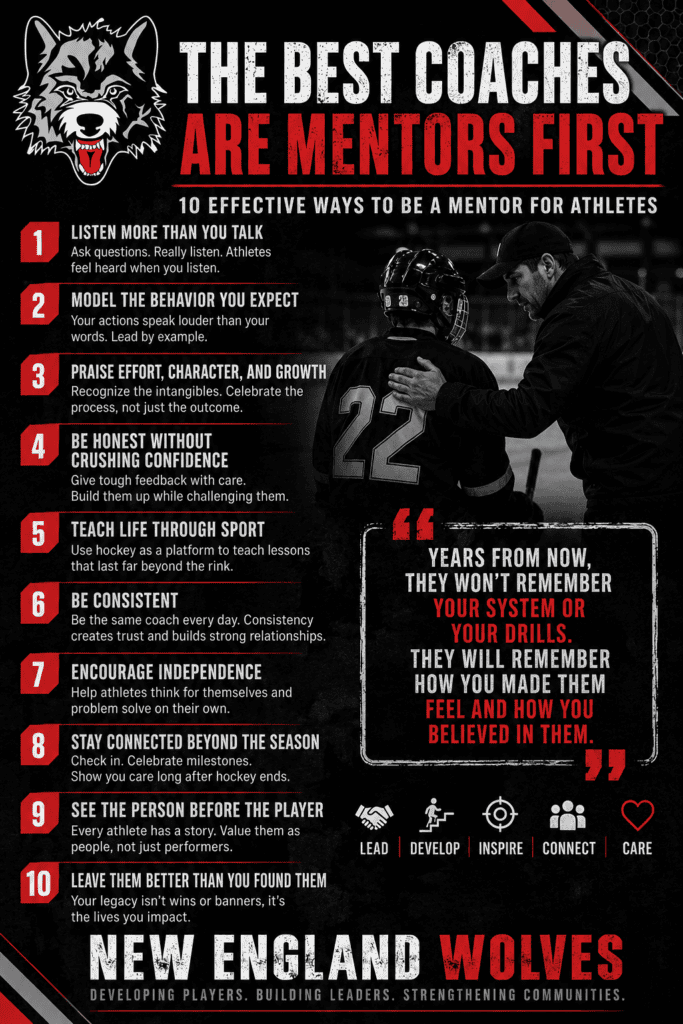
Here are ten ways to become the kind of mentor every young athlete deserves.
1. Listen More Than You Talk
Many adults assume mentoring means having all the answers. In reality, some of the best mentors spend more time asking questions than giving speeches.
Ask athletes how school is going. Ask what they’re struggling with. Ask what they’re excited about. When young people feel heard, they’re much more willing to accept guidance when they need it. Trust is built through listening, not lecturing.
2. Model the Behavior You Expect
Athletes notice everything.
They watch how you treat officials after a tough loss. They see how you speak about other coaches behind closed doors. They notice whether you show up prepared and whether you keep your word.
Your example will always carry more weight than your instruction. If you want disciplined, respectful, accountable athletes, those qualities have to be visible in your own actions every single day.
3. Praise Effort, Character, and Growth
Goals and assists are exciting, but they shouldn’t be the only things that earn recognition.
Celebrate the player who encouraged a teammate after a mistake. Recognize the athlete who stayed after practice to work on a weakness. Compliment the player who demonstrated honesty or resilience during a difficult week.
When athletes understand that character matters just as much as production, they begin to define success differently—and in a healthier way.
4. Be Honest Without Crushing Confidence
Mentors don’t avoid difficult conversations. They also don’t use criticism as a weapon.
The best coaches are able to tell a player exactly what needs improvement while also reminding them that improvement is possible. Honest feedback delivered with encouragement builds confidence. Honest feedback delivered with sarcasm destroys it.
Young athletes should leave conversations believing they have work to do, not believing they aren’t good enough.
5. Teach Life Through Sport
Every practice offers opportunities to discuss lessons that extend well beyond hockey.
Accountability.
Resilience.
Leadership.
Humility.
Preparation.
Teamwork.
Those are the skills that help young people become successful employees, spouses, parents, and leaders long after their playing careers end. Championships fade. Character lasts forever.
6. Be Consistent
One of the greatest gifts a mentor can provide is consistency.
Athletes shouldn’t have to wonder which version of their coach they’re getting each day. Consistency creates psychological safety. Players become more willing to take risks, ask questions, and grow when they know they’re entering a stable environment.
Consistency builds trust, and trust accelerates development.
7. Encourage Independence
A mentor’s goal isn’t to create dependence. It’s to build confidence.
Rather than solving every problem, encourage athletes to think through situations for themselves. Ask what they noticed during a shift. Ask how they might approach the next opportunity differently.
The players who learn to solve problems independently become better decision-makers both on and off the ice.
8. Stay Connected Beyond the Season
Some of the strongest mentoring relationships continue long after the final game.
Send a congratulatory message after graduation. Check in during college. Celebrate a new job or career milestone. A quick text or phone call can remind a former player that they still matter.
Athletes may forget a practice plan, but they’ll rarely forget a coach who continued believing in them after hockey ended.
9. See the Person Before the Player
Every athlete carries challenges that aren’t visible from the stands.
Some are struggling academically. Others are navigating family challenges, anxiety, confidence issues, or personal loss. While coaches aren’t expected to solve every problem, they can create an environment where players feel safe, respected, and valued regardless of their performance.
When athletes know they’re appreciated as people first, they’re often able to perform with greater freedom and confidence.
10. Leave Them Better Than You Found Them
This may be the simplest definition of mentorship.
Success isn’t measured solely by wins, scholarships, or championships. It’s measured by the lives we influence and the people we help shape along the way.
Years from now, very few players will remember what drill you ran on a Tuesday night in November. They will remember how you made them feel, what you believed they were capable of, and whether you helped them become a better version of themselves.
That is the true legacy of a mentor.
Great coaches teach skills.
Exceptional coaches build people.
And the greatest mentors leave an impact that extends far beyond the game.
Thank you for reading.
If you found this article valuable, please consider sharing it with another player, parent, coach, or hockey organization that could benefit from it.
For more articles, coaching resources, player development tools, and exclusive content, subscribe to The Hockey Development Hub on Substack.
You can also explore our books, camps, online resources, and coaching programs at www.scoringconcepts.com, or visit AI Hockey Advisor for instant answers to your hockey development questions.
Together, we can build better players, stronger coaches, and healthier hockey communities—one conversation at a time.
– Coach Andrew Trimble