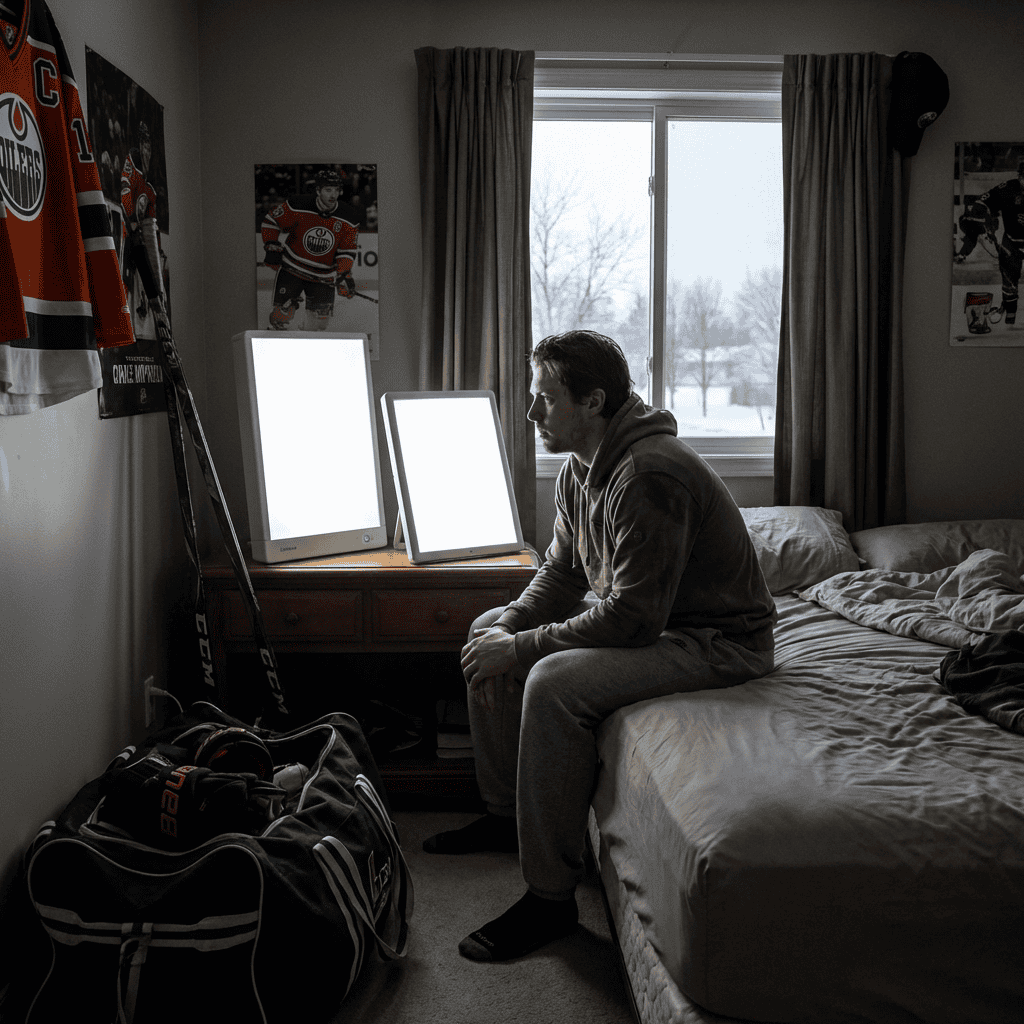
Seasonal Affective Disorder (SAD) is a type of depression that follows a seasonal pattern — most commonly appearing in late fall and winter when daylight hours decrease. For hockey players, especially in northern climates, SAD can be particularly relevant because the sport’s peak season overlaps almost perfectly with reduced sunlight.
What Is Seasonal Affective Disorder?
SAD is linked to:
- Reduced sunlight exposure
- Disruption of circadian rhythms
- Changes in melatonin and serotonin levels
- Vitamin D deficiency
Common symptoms include:
- Low mood or irritability
- Fatigue or low energy
- Increased sleep
- Loss of motivation
- Difficulty concentrating
- Cravings for carbohydrates
For athletes, these symptoms can directly affect performance and development.
How SAD Impacts Hockey Players
1. Energy and Performance
Hockey demands:
- Explosive skating
- Quick decision-making
- High anaerobic output
- Emotional intensity
Fatigue and low motivation can reduce:
- Practice intensity
- Compete level
- Recovery quality
- Focus during games
Even a small drop in sharpness matters in hockey.
2. Motivation & Practice Habits
Youth and junior players may:
- Feel “burned out” faster
- Skip extra skill work
- Struggle with early morning practices
- Lose internal drive mid-season
This can sometimes be misinterpreted as laziness rather than a biological mood shift.
3. Emotional Regulation & Team Dynamics
Players with SAD may:
- Be more irritable
- Withdraw socially
- Overreact to mistakes
- Struggle with confidence
In a team environment, this can impact:
- Locker room chemistry
- Coach-player relationships
- Leadership consistency
4. Academic & Cognitive Effects (Youth Players)
Many hockey players are students first. SAD can impact:
- Concentration
- Memory
- Executive function
This creates a double stressor: school + sport during the darkest months.
Why Hockey Players Are Particularly Vulnerable
- Indoor sport (limited daylight exposure)
- Heavy winter competition schedule
- Northern geography (Minnesota, New England, Canada, etc.)
- Early morning or late-night ice times
- Long travel in dark conditions
- High pressure during peak season
The hockey calendar often means players see very little daylight on weekdays.
Practical Strategies for Hockey Families & Coaches
1. Light Exposure
- 20–30 minutes of morning sunlight when possible
- Consider medically recommended light therapy (under professional guidance)
- Avoid staying indoors all day outside of rink time
2. Vitamin D
- Have levels checked by a physician
- Supplement only under medical guidance
3. Sleep Discipline
- Consistent bedtime/wake time
- Avoid screens late at night
- Protect 8–10 hours for youth athletes
4. Mid-Season Mental Reset
- Short mental break if needed
- Change practice format to boost engagement
- Emphasize fun and skill development over standings
5. Coach Awareness
Coaches should monitor:
- Sudden mood shifts
- Loss of enthusiasm
- Withdrawal from teammates
- Performance drop without physical cause
Early conversations help normalize what players may be feeling.
Important Distinction
SAD is not:
- Weakness
- Poor work ethic
- Lack of toughness
It is a recognized medical condition that can affect high-performing athletes.
By Andrew Trimble
To Purchase Andrew’s book, The Hockey Planner, follow this link here – The Hockey Planner: A Year by Year Plan to Assist You on Your Hockey Coaching Journey: From Learn to Play to Junior Hockey: Trimble, Andrew: 9781963743395: Amazon.com: Books