THE RISE OF ANALYTICS IN HOCKEY
Why NHL Front Offices Value Data More Than Ever
For decades hockey decisions were made almost entirely through the “eye test.”
Scouts sat in cold rinks with notebooks.
Coaches trusted instinct.
General Managers relied heavily on experience, relationships, and feel for the game.
That still matters today.
But over the last 20 years, another layer has entered hockey:
ANALYTICS.
The modern NHL front office now combines:
• traditional scouting
• video analysis
• performance science
• tracking technology
• statistical modeling
The goal?
To understand what actually drives winning.
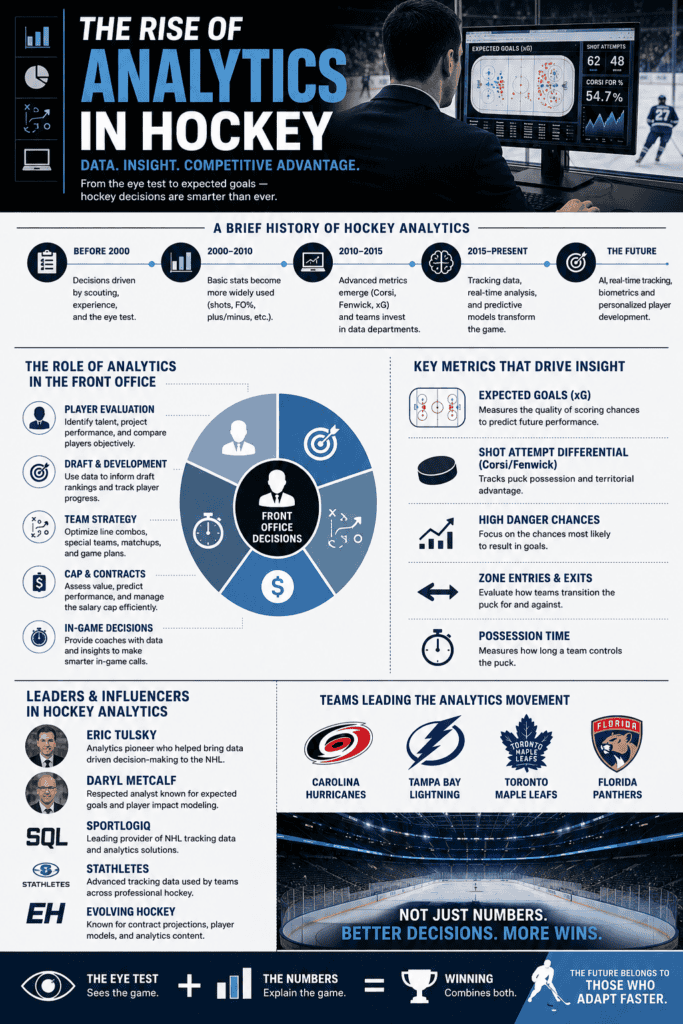
Early Hockey Analytics
In the beginning, analytics in hockey was simple:
• plus/minus
• shots
• faceoff percentage
• time on ice
But analysts quickly realized those numbers didn’t always tell the full story.
A player could:
• score points but hurt possession
• have low point totals but drive play
• create offense without getting assists
• defend extremely well without appearing on scoresheets
This led to advanced metrics becoming more important.
The Analytics Revolution
Around the 2010s, NHL teams began aggressively hiring analysts and data departments.
One of the biggest influences was the “Moneyball” movement in baseball, led by Billy Beane and later adapted across sports.
In hockey, teams started studying:
• Corsi (shot attempt differential)
• Fenwick (unblocked shot attempts)
• Expected Goals (xG)
• Zone Entries
• Controlled Exits
• High Danger Chances
• Possession Time
• Matchup Data
The idea became:
“Can we identify value before everyone else sees it?”
Front offices realized analytics could help:
• identify underrated players
• improve drafting
• project development
• optimize contracts
• improve systems play
• manage salary cap efficiency
What Do Hockey Analytics Departments Actually Do?
Modern analytics staffs work closely with:
• General Managers
• Amateur Scouts
• Pro Scouts
• Coaching staffs
• Video departments
• Sports science/performance teams
Their responsibilities may include:
• player tracking
• opponent tendencies
• lineup optimization
• power play analysis
• transition tracking
• trade evaluations
• draft modeling
• injury workload monitoring
Some organizations now combine video clips directly with statistical trends to create player profiles and game reports.
The NHL is no longer just scouting talent.
It’s tracking patterns.
Leaders & Influencers in Hockey Analytics
Some of the most influential people and organizations in hockey analytics include:
Eric Tulsky
Known for helping bring analytics deeper into NHL front offices and later joining the Carolina Hurricanes leadership structure.
Daryl Metcalf
Respected for public work on expected goals and player impact modeling.
Sportlogiq
One of the biggest hockey data and tracking companies in the sport today.
Stathletes
Provides advanced tracking data used throughout professional hockey.
Evolving Hockey
Well known for contract projections and player evaluation models.
Teams Often Viewed as Analytics-Driven
Several NHL organizations became known for heavily embracing analytics, including:
• Carolina Hurricanes
• Tampa Bay Lightning
• Toronto Maple Leafs
• Florida Panthers
These teams often focus heavily on:
• puck possession
• transition play
• speed
• shot quality
• offensive zone pressure
But Analytics Are NOT Replacing Coaches
One of the biggest misconceptions in hockey is that analytics replace hockey people.
They don’t.
Analytics are a tool.
Great organizations combine:
THE EYE TEST + THE NUMBERS.
The best coaches still understand:
• leadership
• confidence
• momentum
• habits
• emotion
• competitiveness
Analytics simply help uncover details that are difficult to see consistently in real time.
The Future of Hockey Analytics
The future is moving toward:
• real-time player tracking
• AI-assisted video breakdowns
• predictive development models
• biometric performance monitoring
• individualized player development systems
At younger levels of hockey, analytics are beginning to influence:
• recruiting
• scouting reports
• video review
• skill tracking
• player evaluation
And eventually…
players who understand their own data may develop faster than players who don’t.
The game is evolving rapidly.
The smartest organizations are learning how to blend:
Hockey IQ + Human Relationships + Data Intelligence.
That combination may define the future of winning.
By Andrew Trimble