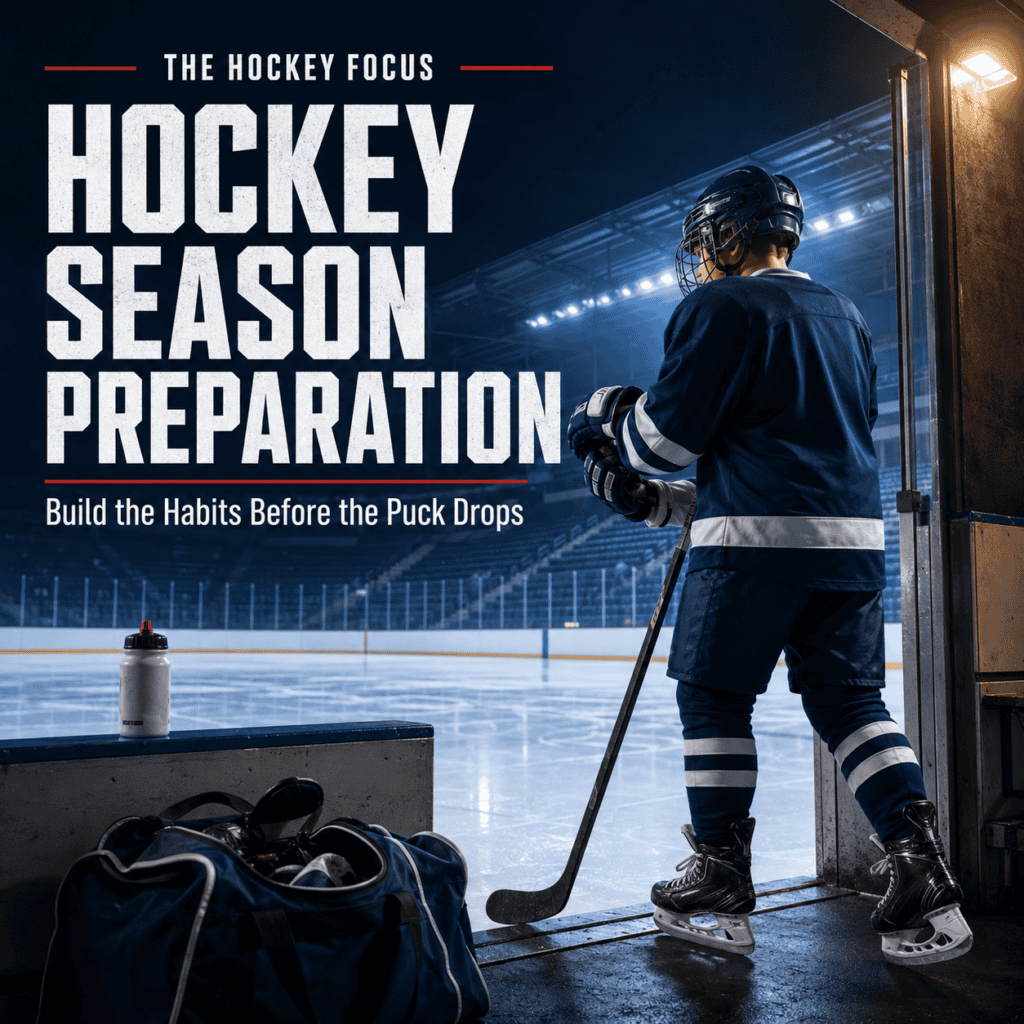
Hockey Season Preparation: Build the Habits Before the Puck Drops
The start of hockey season always seems to arrive faster than expected. One week, players are enjoying summer camps, vacations, and outdoor activities; the next, they are stepping onto the ice for evaluations, practices, and games. The players who begin the season successfully are rarely the ones who simply trained the hardest—they are the ones who prepared with purpose.
Proper preparation involves more than getting back into shape. Players must sharpen their skating, rebuild their timing, organize their schedules, and prepare mentally for the demands of a long season. The goal is not to peak during the first week, but to arrive ready to compete, learn, and steadily improve.
Rebuild Your Hockey Conditioning
Hockey conditioning is different from simply running, cycling, or lifting weights. Players must repeatedly produce short bursts of speed, recover quickly, and maintain their technique while fatigued. The weeks before the season should include a combination of strength training, sprint work, mobility, and hockey-specific conditioning.
Players should avoid suddenly increasing their workload when preseason practices begin. A gradual build-up helps prepare the body while reducing the likelihood of injuries, excessive soreness, and early-season fatigue. Quality movement should always remain more important than completing another exhausting workout.
Get Back on the Ice With a Purpose
Preseason ice sessions should help players rediscover their edges, balance, puck control, and shooting rhythm. Instead of spending every session playing unstructured games, players should devote time to skating mechanics, puck touches, passing, and shooting. Repetition builds the confidence needed to execute skills under pressure.
This is also a good time to practice skills at game speed. Players should work on collecting difficult passes, making decisions with limited space, protecting the puck, and shooting quickly. The objective is to make fundamental skills feel natural again before practices and games become more competitive.
Strengthen Your Body—Don’t Destroy It
Strength training should continue as the season approaches, but the emphasis may need to change. Players should focus on maintaining strength, improving power, and supporting joint stability rather than chasing personal records in the weight room. Exercises for the legs, hips, core, back, and shoulders can help players withstand the physical demands of the season.
Mobility and recovery work are equally important. Tight hips, limited ankle mobility, and poor shoulder movement can affect skating mechanics and increase stress on the body. A short, consistent mobility routine can be more valuable than an occasional marathon stretching session.
Prepare Your Hockey Equipment
Equipment should be inspected before the first official practice. Skates may need sharpening, baking, or new laces, while sticks should be checked for cracks and cut to the correct height. Helmets, cages, shoulder pads, elbow pads, gloves, pants, shin guards, and protective cups should all fit properly.
Young players can grow significantly during the offseason, making last season’s equipment uncomfortable or unsafe. Parents should avoid waiting until the morning of evaluations to discover that skates no longer fit or a helmet needs replacement. Preparing equipment early removes unnecessary stress and allows players to focus on hockey.
Establish a Consistent Routine
A successful season requires more than attending practices and games. Schoolwork, meals, sleep, training, travel, and family responsibilities all compete for a player’s time. Establishing a routine before the season begins can prevent players from feeling overwhelmed once the schedule becomes busy.
Sleep should be treated as part of the training program. Players who consistently stay up late, skip breakfast, or arrive at the rink poorly hydrated will struggle to perform and recover. Simple habits—packing the hockey bag the night before, planning meals, and following a regular bedtime—can create a major competitive advantage.
Set Process-Based Goals
Many players begin the year with goals such as scoring more points, making the top team, or earning more playing time. Those goals can provide motivation, but players do not completely control the results. They have much more control over their preparation, effort, communication, and willingness to learn.
A player might commit to winning more puck races, improving defensive positioning, shooting 100 pucks several times per week, or asking coaches for feedback. These process-based goals create daily actions that can be measured. When players consistently control what they can control, better results often follow.
Prepare Mentally for Adversity
Every hockey season includes difficult moments. Players may experience reduced playing time, scoring slumps, injuries, mistakes, lineup changes, or disappointing team results. Mental preparation means understanding that adversity is not evidence that development has stopped.
Players should decide in advance how they will respond when something goes wrong. Strong body language, honest self-evaluation, and productive communication with coaches can prevent one difficult moment from becoming a difficult month. Resilience is not something players suddenly discover during the playoffs—it is developed through everyday responses.
Understand Your Role
Not every player will lead the team in scoring, play on the power play, or receive the most ice time. However, every player can bring energy, compete defensively, support teammates, communicate, and execute the responsibilities of their position. Understanding and embracing a role can help a player earn trust early in the season.
Roles may also change as the season develops. Players who remain coachable and dependable often earn additional opportunities. Instead of becoming frustrated by the first lineup decision, players should focus on becoming someone the coaching staff can trust in important situations.
Parents Play an Important Role
Parents can support preseason preparation by helping players become organized and responsible. They can provide transportation, proper nutrition, and encouragement without making every practice or evaluation feel like a final exam. The emotional environment surrounding the player matters.
The ride home from the rink should not become an immediate performance review. Players need space to process practices and games, especially when they are disappointed. Parents can help most by remaining steady, emphasizing effort and growth, and allowing coaches to coach.
Coaches Must Prepare Too
Season preparation is not limited to players. Coaches should enter the year with clear expectations, organized practice plans, and an understanding of how they want their team to play. Early practices establish the culture that will shape the rest of the season.
Coaches should communicate standards for effort, attendance, behavior, and teamwork before problems occur. They should also make development a priority instead of immediately focusing only on systems and winning games. A well-prepared coach creates an environment in which players understand what is expected and receive the instruction needed to improve.
Start Ready, Then Keep Building
The opening weeks of the hockey season are important, but they do not define the entire year. Players should arrive prepared without believing they need to be perfect on the first day. Development is a season-long process built through consistent work, good recovery, and an honest response to coaching.
The best preparation creates confidence because the player knows the work has already begun. Get your body ready, sharpen your skills, organize your routine, and establish the habits you want to carry throughout the season. When the puck finally drops, preparation allows you to stop worrying about whether you are ready—and start playing.