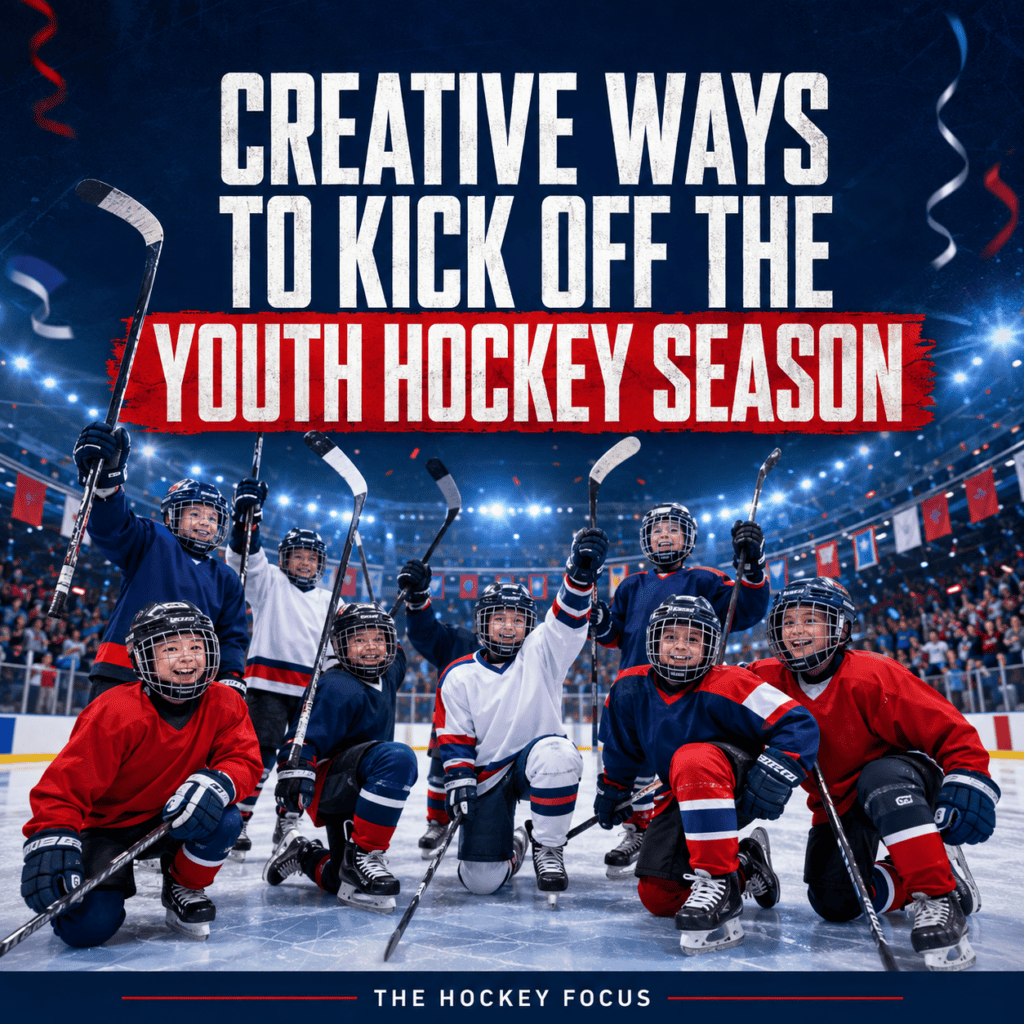
Creative Ways to Kick Off the Youth Hockey Season
The opening of a youth hockey season should feel like more than the first practice on the calendar. It is an organization’s first opportunity to build excitement, establish its culture and make players and families feel connected. A creative kickoff event can generate enthusiasm that lasts long after opening weekend—and it does not require an enormous budget.
1. Host an Organization-Wide Opening Night
Bring every level together for one celebration at the rink. Introduce the coaches, recognize volunteers and allow each team to skate briefly in front of the organization. Add music, player introductions, raffles, food and an organization-wide photograph. Younger players will enjoy seeing the older teams, while older players can begin understanding their responsibility as role models.
Organizations with junior, high school or older youth teams can finish the event with an exhibition game. Let younger players form a tunnel as the teams enter the ice, participate in an intermission shootout or join the older players for photographs afterward. This creates a visible pathway from Learn to Play through the highest level of the organization.
2. Create a Hockey Skills Carnival
Instead of beginning with a traditional practice, transform the rink into a skills carnival. Stations could include a radar-gun shooting contest, obstacle course, target shooting, fastest-skater race, stickhandling challenge and goaltender competition. Players can receive a card and collect a stamp after completing each station.
The emphasis should be on energy and participation—not identifying the best player. Use different challenges for each age group and include stations where beginners can succeed. Finish with small-area games or a coaches-versus-players competition to make the first trip to the rink memorable.
3. Combine the Kickoff with a Community Project
A season-opening food, clothing, equipment or school-supply drive immediately communicates what the organization values. Each player can bring one donated item before stepping onto the ice. Teams could compete to collect the most items, but the organization should celebrate the total community impact rather than a single winner.
Consider inviting representatives from the benefiting charity to speak briefly. Players then understand who they are helping and why the project matters. Community service can become a season-long part of the organization’s identity instead of a single annual obligation.
4. Run an Equipment Swap and Welcome Center
Hockey equipment can create a major financial barrier for families. An opening-week equipment exchange allows parents to donate, trade or purchase gently used gear at an affordable price. Experienced families can also help new parents understand skate sizing, helmet fit, stick length and the equipment their children actually need.
This is especially valuable when paired with a beginner-friendly open house or Try Hockey event. USA Hockey’s 2026–27 national Try Hockey for Free dates include October 3, 2026, and February 27, 2027, providing associations with additional opportunities to welcome new players into the sport. USA Hockey’s Try Hockey for Free program offers supporting resources for local associations.
5. Introduce a Big Buddy Program
Pair Learn to Play and younger players with members of the organization’s oldest teams. The older players can help tie skates, lead warmups, demonstrate a drill or send their younger partners encouraging messages during the season. A simple relationship like this can make a six-year-old feel like an important part of the entire organization.
This program also develops leadership among teenage players. It gives them a meaningful role beyond scoring goals and winning games. Schedule several follow-up activities during the season so the connection continues after opening weekend.
6. Make the Parent Meeting More Engaging
The first parent meeting should not be an hour-long reading of rules that could have been sent by email. Begin with a short welcome reception, introduce the people who can answer specific questions and give families a clear picture of the organization’s mission. Then explain communication procedures, development priorities, volunteer opportunities and behavioral expectations.
USA Hockey recommends using the preseason meeting to introduce the coaching staff, communicate the team’s vision and establish expectations before problems develop. USA Hockey’s preseason parent-meeting guidance can help coaches prepare. A well-run meeting can reduce confusion and strengthen the partnership between families and coaches.
7. Celebrate Every Player on Social Media
Use kickoff week to introduce teams, coaches, volunteers and graduating players across the organization’s social platforms. Create short videos asking players their favorite NHL team, favorite hockey memory or goal for the season. A “Why I Play Hockey” series can help families connect with the personalities behind the helmets.
Organizations should obtain the required photo and media permissions before posting players. Once permissions are confirmed, encourage families to share the content. This expands the organization’s reach, celebrates its members and helps potential new families see the community they could join.
8. Build a Season Passport
Give each youth player a small season passport containing activities to complete during the year. Challenges might include attending an older team’s game, bringing a friend to the rink, thanking an official, participating in a community-service project, reading a hockey book or practicing a skill at home.
Players can collect stamps, stickers or signatures throughout the season. Anyone who completes the passport can be recognized at the year-end celebration. The objective is not to create another competition; it is to encourage participation in the complete hockey experience.
Start the Season with a Sense of Belonging
The best season kickoffs accomplish three things: they make players excited to return, help families understand the organization and give everyone a sense of belonging. Hockey organizations should choose ideas that reflect their own community, resources and values. Even a modest event can make a lasting impression when it is welcoming, organized and centered on the players.
A youth hockey season will eventually be measured in practices, games and tournaments—but players often remember the people, traditions and moments that made the rink feel like home.
For more hockey-development ideas, coaching resources, camps and clinics, visit Scoring Concepts.
Subscribe to Scoring Concepts on YouTube for hockey drills, coaching insights, player-development videos and episodes of the Snapshots Hockey Show.